Why Are Subscription Models Failing Lifestyle Brands and How Do You Fix Them?
Subscription fatigue is real: 40% of lifestyle brand subscribers cancel within 90 days. The fix isn't better retention tactics—it's rebuilding around genuine repeat purchase behavior.
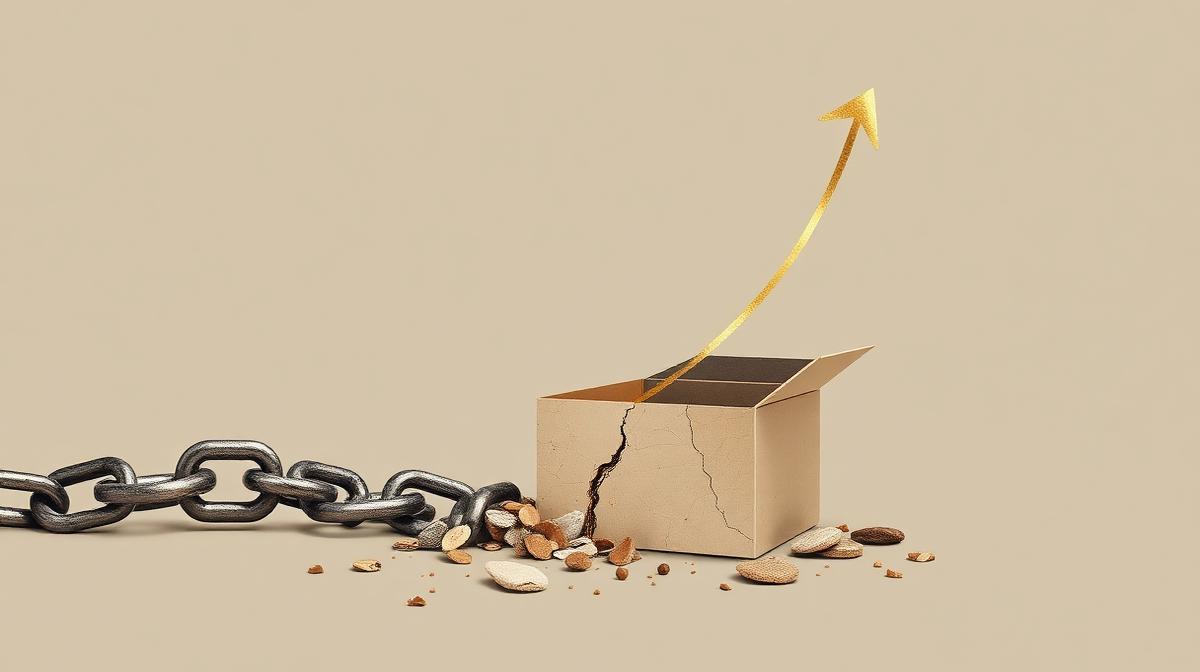
Many lifestyle brands witness declining subscription model efficacy due to forced value propositions and subscription fatigue, leading to unsustainable churn. Fixing this requires pivoting from mandatory subscriptions to opt-in replenishment models and value-driven loyalty programs that genuinely enhance Customer Lifetime Value (CLTV).
| Feature | Standard Agency | PMC's P&L Model |
|---|---|---|
| **Contract Basis** | Campaign spend, ad hoc projects, hours-based. | **Revenue & Profit Growth** (P&L line item), specific KPIs. |
| **Focus** | Impressions, clicks, conversions, creative execution. | **Contribution Margin**, Allowable CAC, MER, CLTV, Profitability. |
| **Goal** | Campaign success, hitting media spend targets. | **Sustainable business growth**, P&L optimization, market share. |
| **Risk Bearing** | Minimal, paid regardless of brand's P&L outcomes. | **Shared risk/reward**, tied to direct financial performance. |
| **Strategy** | Media plan optimization, channel diversification. | **Holistic business strategy**, unit economics, operational efficiency, brand equity. |
| **Reporting** | Ad platform metrics, vanity metrics. | **Financial statements**, Cohort analysis, LTV:CAC, Incremental revenue. |
Why Are Lifestyle Subscription Models Experiencing Increased Failure Rates?
Lifestyle brands, particularly those in the $5M-$25M revenue bracket, often misinterpret the success of adjacent industries with truly consumable products. When a brand attempts to shoehorn non-replenishable or minimally consumable products into a subscription box, it creates a forced value proposition. Customers, experiencing subscription fatigue from an oversaturated market, quickly discern a lack of genuine convenience or cost-saving benefits. This inevitably leads to high churn rates, eroding initial Customer Acquisition Cost (CAC) investments and severely impacting Customer Lifetime Value (CLTV). The upfront marketing spend required to acquire these subscribers becomes an unrecoverable drain on the contribution margin, as the anticipated recurring revenue fails to materialize. Brands need to distinguish between true replenishment needs and perceived convenience.
How Does Forcing Subscriptions Negatively Impact a Brand's P&L?
Forcing subscriptions, regardless of genuine customer need, creates significant pressure on a brand's Profit & Loss (P&L) statement. The front-loaded costs associated with customer acquisition – including media spend, promotional offers, and fulfillment for initial boxes – are absorbed immediately. If customers churn after only one or two cycles, the Allowable CAC for a truly profitable subscriber is far exceeded. This inflates the Marketing Efficiency Ratio (MER), suggesting marketing is working harder than it truly is, while simultaneously depressing the average CLTV. The resulting low LTV:CAC ratio means that every new subscriber acquisition operates at a net loss, directly cutting into the overall contribution margin and preventing scalable, profitable growth. Bain & Company's research frequently highlights the detrimental impact of poor customer retention strategies on long-term profitability.
What's the Difference Between a Forced Subscription and a Value-Driven Replenishment Model?
A forced subscription compels customers into recurring purchases for products they may not genuinely need on a fixed schedule, often disguised as exclusive access or minor discounts. This often leads to high cancellation rates and customer dissatisfaction, as the perceived value diminishes with each unwanted delivery. In contrast, a value-driven replenishment model is opt-in and tailored to actual consumption patterns or personalized needs, focusing on genuine convenience and problem-solving. This could involve smart reordering based on past purchase frequency, usage data, or a customer-controlled subscription portal. The distinction lies in offering genuine utility versus perceived novelty. Adopting the latter significantly enhances CLTV because it builds trust and organic loyalty, rather than relying on contractual obligations that breed resentment.
How Can Brands Identify if Their Subscription Model is Failing?
Key indicators of a failing subscription model include consistently high churn rates (often exceeding 10-15% monthly for replenishment models), a declining or stagnant Customer Lifetime Value (CLTV), and an unfavorable LTV:CAC ratio (ideally above 3:1). Another clear signal is a negative or decreasing contribution margin per subscriber over their lifecycle. Brands should analyze cohort data: if the average subscription duration is short and the cost to acquire and fulfill initial orders isn't recouped, the model is unsustainable. Furthermore, a rising volume of customer service inquiries related to cancellations, skipped orders, or dissatisfaction with product frequency indicates a mismatch between the brand's offering and customer expectations. Shopify Plus analytics, when properly configured, can provide granular insights into these metrics.
What is the Role of Loyalty Programs in Addressing Subscription Fatigue?
Loyalty programs, when strategically designed, can be a powerful antidote to subscription fatigue by shifting the focus from mandatory recurring payments to earned benefits and deeper brand engagement. Instead of forcing subscriptions, brands can incentivize repeat purchases and encourage higher CLTV through tiered rewards, exclusive access, or personalized experiences that are decoupled from a fixed subscription. This allows customers to engage with the brand on their own terms, reducing the friction associated with auto-renewals. A well-executed loyalty program can enhance the contribution margin by fostering organic customer advocacy and decreasing future Allowable CAC by making existing customers more valuable. McKinsey & Company consistently outlines the financial benefits of robust, non-transactional loyalty initiatives in driving long-term customer relationships.
How Can Brands Transition from Forced Subscriptions to Sustainable Replenishment?
Transitioning effectively requires a multi-faceted approach. First, leverage historical purchase data to identify genuinely consumable products and natural repurchase cycles. Convert existing forced subscribers to an opt-in, flexible replenishment model with clear benefits (e.g., small discount, free shipping on reorders) rather than mandatory renewals. For non-consumable products, integrate dynamic reorder prompts into your customer journey rather than default subscriptions. Secondly, invest in a robust loyalty program that rewards engagement beyond just purchases, fostering a deeper brand affinity. Thirdly, enhance product value: focus on innovation and quality that naturally drives repeat purchases. This pivot will improve CLTV, lower Allowable CAC over time, and positively impact contribution margin by aligning with authentic customer needs, ultimately boosting your P&L. NRF research emphasizes customer-centricity as paramount for sustainable retail growth.
Strategic Perspective:
"In the $5M-$25M revenue range, every dollar of marketing spend and every customer engagement must directly contribute to the bottom line. Forcing subscriptions is a short-sighted tactic that often inflates acquisition costs and deflates long-term profitability. We see countless brands sacrificing their contribution margin and severely damaging their CLTV by misinterpreting customer 'contract' as 'loyalty.' Our focus must shift to creating genuine, value-driven reasons for customers to return – be it through superior product, indispensable convenience, or an unparalleled brand experience. That's the only way to genuinely impact the P&L and unlock scalable growth." – PMC Lead Strategist
Your Strategic Next Step:
If your brand is grappling with high churn, stagnant CLTV, or an unsustainable subscription model, it's time for a critical evaluation of your growth strategy. Don't let misaligned tactics erode your profitability. PMC specializes in optimizing unit economics and rebuilding models for sustained P&L performance.
[Get a P&L-based growth quote](/get-quote)
Or, for a deeper dive into your specific challenges:
[Book a Fit Call](/contact)
Ready to Turn These Insights Into P&L Results?
PMC doesn't just write about growth—we contract it. See what KPI-contracted growth looks like for your brand.
Get Your Quote