Phygital Retail Strategy: How Fashion & Beauty Brands Win in 2026
The brands winning in 2026 aren't choosing between DTC and retail—they're building phygital ecosystems where every touchpoint feeds the next.
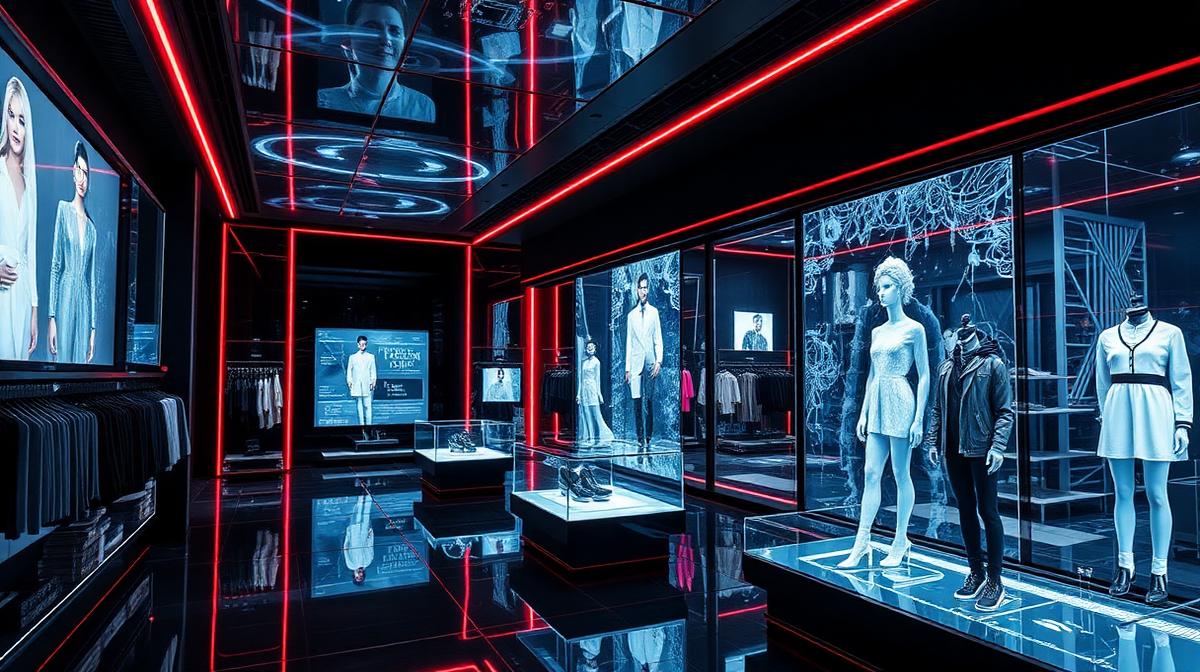
What Is Phygital Retail and Why Does It Matter for $5M–$25M Brands?
Phygital isn't a buzzword—it's the operating model for every fashion and beauty brand that will exist in 2030. It means your physical and digital channels aren't separate P&Ls competing for attribution. They're a single, integrated ecosystem designed to maximize customer lifetime value across every touchpoint.
The reality for mid-market brands: You can't afford a $50M omnichannel transformation. But you also can't afford to operate DTC, wholesale, and retail as isolated silos. The brands that figure out how to create phygital synergy at the $5M–$25M level are the ones that break through.
How Are Winning Brands Connecting Online and Offline Customer Data?
The number one phygital challenge isn't technology—it's data unification. Most mid-market brands have:
- •Shopify or BigCommerce data for DTC
- •Separate POS data from retail locations
- •Wholesale order data in a different system
- •Email/SMS data in Klaviyo or similar
- •Zero connection between these systems
The fix isn't a $2M CDP implementation. It's a pragmatic data architecture that:
- 1.Creates a unified customer ID across all touchpoints
- 2.Ingests transaction data from all channels into a single source of truth
- 3.Enables cohort analysis across the full customer journey
- 4.Powers personalization that follows the customer from Instagram to store to email
What Phygital Tactics Actually Drive Measurable CLTV?
1. Endless Aisle: Store Staff Access to Full Digital Catalog
When a customer visits your retail location and their size or preferred colorway is out of stock, the sale shouldn't be lost. Endless aisle gives store associates access to your full digital inventory, enabling them to place orders on the spot with free shipping to the customer's home.
Impact: Brands implementing endless aisle see 12–18% incremental retail revenue and a 25% reduction in "walk-aways."
2. Digital Clienteling with Unified Purchase History
Your store associate should see a customer's online purchase history, browsing behavior, and loyalty tier before the conversation starts. This isn't sci-fi—it's a tablet app connected to your unified customer profile.
Impact: Clienteling with data-driven recommendations increases average transaction value by 22–35%.
3. Online-to-Offline (O2O) Campaign Attribution
The hardest phygital measurement problem: did that Facebook campaign drive the in-store visit? Solutions:
- •Store visit lift studies: Available through Meta and Google for brands with sufficient foot traffic
- •Coupon/QR code bridging: Unique codes in digital campaigns redeemed in-store
- •Matched customer analysis: Compare online ad-exposed customers against in-store transaction data
How Do You Build a Phygital P&L That Makes Sense to Your CFO?
Stop running separate P&Ls for DTC and retail. Build a unified customer P&L that measures:
- •Customer acquisition cost across all channels (blended CAC)
- •Lifetime revenue per customer across all channels (blended CLTV)
- •Channel contribution margin (what each channel contributes after direct costs)
- •Customer migration patterns (do retail customers become DTC buyers and vice versa?)
The insight that changes everything: Most brands discover that customers who shop across 2+ channels have 3–4x higher CLTV than single-channel customers. This transforms how you think about channel investment—retail isn't a cost center, it's a CLTV multiplier.
What Technology Stack Enables Phygital at the Mid-Market Level?
You don't need enterprise-grade solutions. A pragmatic phygital stack for $5M–$25M brands:
- •Unified commerce: Shopify POS + Shopify Online (or equivalent) for single-platform transaction data
- •Customer data: Klaviyo or Drip for unified email/SMS with purchase data from all channels
- •Analytics: Looker Studio or Metabase connecting all data sources
- •Clienteling: Endear or Tulip for store associate customer intelligence
Total cost: $2K–$8K/month, not $200K+.
What's the 6-Month Phygital Roadmap for a Mid-Market Brand?
Months 1–2: Data audit and unification plan. Identify all customer touchpoints and map data flows.
Months 3–4: Implement unified customer ID and connect DTC + retail transaction data. Launch basic clienteling.
Months 5–6: Deploy endless aisle, launch cross-channel campaigns with attribution, build unified customer P&L.
The PMC difference: We've built phygital measurement frameworks for fashion and beauty brands that prove ROI to the board in 90 days—and we tie our fees to the CLTV improvement that phygital integration delivers.
Ready to Turn These Insights Into P&L Results?
PMC doesn't just write about growth—we contract it. See what KPI-contracted growth looks like for your brand.
Get Your Quote