Omnichannel Measurement: How to Track Performance Across DTC, Wholesale, and Retail
If you can't measure your full omnichannel business in one view, you're making decisions with incomplete data. Here's the unified measurement framework.
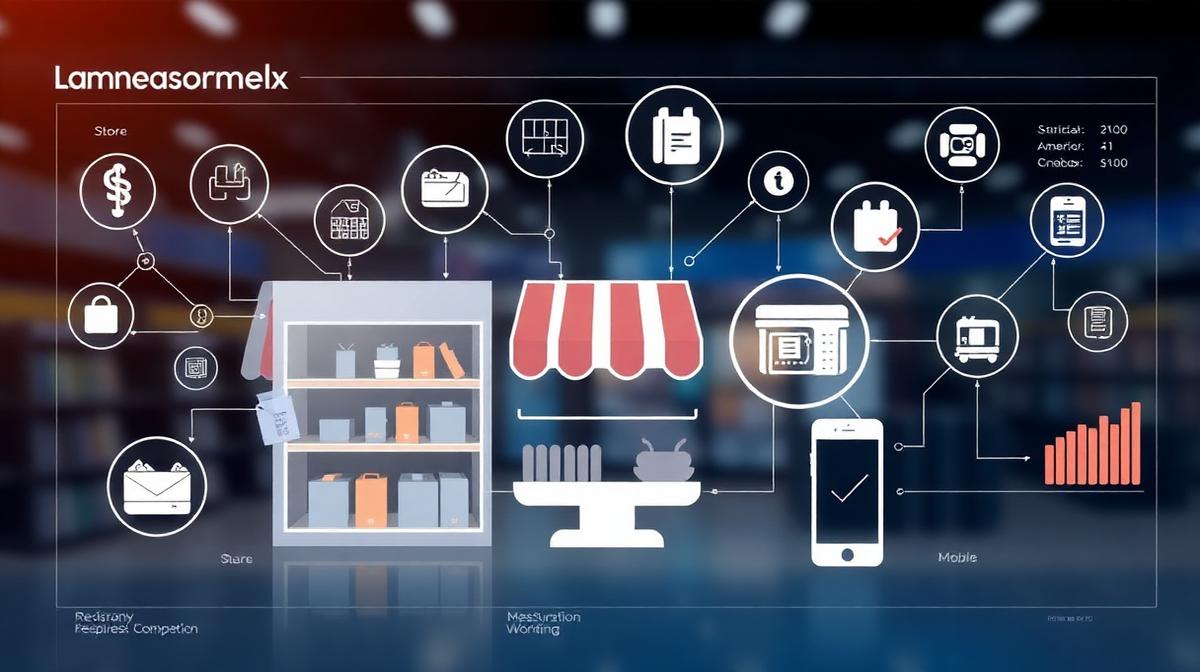
The Measurement Gap in Omnichannel Fashion
Most fashion brands operate across 3+ channels: DTC website, wholesale, marketplaces, and possibly owned retail. Yet their measurement systems were built for single-channel businesses.
The result: DTC gets granular attribution. Wholesale gets a quarterly sell-through report. Retail gets POS data that never connects to marketing. And nobody has a unified view of the customer.
The Unified Measurement Framework
Level 1: Channel-Level Metrics
DTC (Website) - Revenue, AOV, conversion rate, MER - CAC by acquisition channel - CLTV by customer cohort
Wholesale - Sell-through rate by retailer - Reorder velocity - Brand share within category at each retailer
Marketplaces (Amazon, etc.) - Organic vs. sponsored revenue split - ACOS (Advertising Cost of Sale) - Customer acquisition vs. cannibalization rate
Owned Retail - Revenue per square foot - Conversion rate (foot traffic to purchase) - Clienteling-driven revenue vs. walk-in
Level 2: Cross-Channel Metrics
Channel Overlap Analysis - What % of DTC customers also buy wholesale? (And vice versa?) - Does opening a retail location increase or cannibalize DTC in that geography? - Are marketplace customers incremental or just DTC customers shopping elsewhere?
Halo Effect Measurement - Does wholesale presence drive DTC branded search? - Does DTC marketing drive wholesale sell-through? - Does retail presence increase online AOV in surrounding zip codes?
Customer Journey Mapping - What's the most common cross-channel path to purchase? - Do customers who shop multiple channels have higher CLTV? - Where do customers discover vs. where do they transact?
Level 3: Business-Level Metrics
Total Brand MER - Total revenue (all channels) ÷ Total marketing spend (all channels) - This is the single most important metric for omnichannel brands
Blended Gross Margin - Weighted average margin across all channels - Helps identify if you're over-indexed on low-margin channels
Customer-Level P&L - Total revenue from a customer across all channels - Total cost to acquire and serve across all channels - True CLTV that accounts for omnichannel behavior
The Data Infrastructure Required
Minimum Viable Omnichannel Measurement 1. **Unified customer ID** across DTC and retail (email or loyalty number) 2. **Weekly data feed from wholesale partners** (sell-through by SKU) 3. **POS integration** for retail locations 4. **Dashboard that combines** all channel data in one view
Advanced Omnichannel Measurement 1. **CDP** that unifies customer data across all touchpoints 2. **Geo-lift testing** to measure cross-channel halo effects 3. **MMM (Media Mix Modeling)** that includes wholesale and retail outcomes 4. **Customer journey analytics** across digital and physical touchpoints
Common Omnichannel Measurement Mistakes
1. Measuring Channels in Isolation - DTC team optimizes for DTC ROAS while wholesale suffers - The customer doesn't care about your channel structure
2. Ignoring the Halo Effect - A $100K wholesale placement that drives $200K in DTC branded search is incredibly efficient - But it looks expensive if you only measure wholesale ROI
3. Double-Counting Revenue - Customers who browse DTC and buy wholesale (or vice versa) - Without unified customer IDs, you're counting some customers twice
How PMC Measures Omnichannel Performance
We build unified dashboards that give our clients a single view of their total brand performance. No more "the DTC team says one thing, wholesale says another." One P&L, one truth, one strategy.
Ready to Turn These Insights Into P&L Results?
PMC doesn't just write about growth—we contract it. See what KPI-contracted growth looks like for your brand.
Get Your Quote