The Rise of Fashion AI Design Tools: Threat or Opportunity for Creative Teams?
AI design tools can generate 500 fashion sketches in the time it takes a designer to create one. But the smartest brands aren't replacing designers—they're supercharging them.
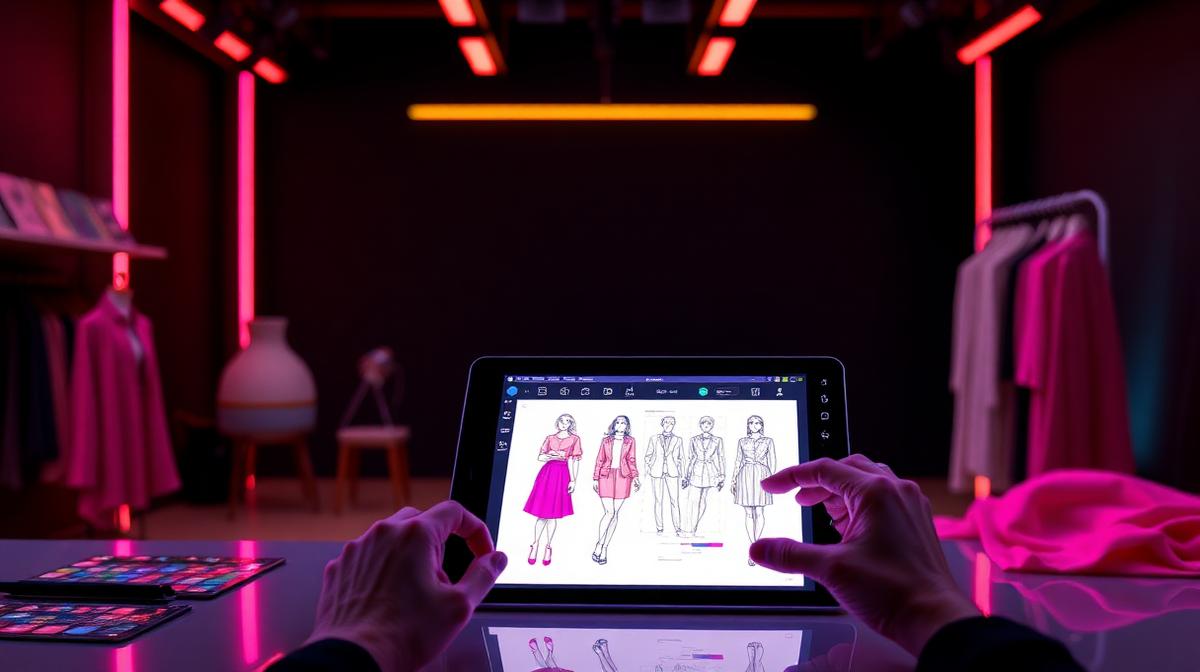
The AI Design Revolution
In the past 18 months, AI design tools have gone from novelty to necessity. Fashion brands using AI in their design process report:
- •60% reduction in concept-to-prototype timeline
- •3x more design variations explored per season
- •25% improvement in first-season sell-through rates
- •40% reduction in sample production costs
What AI Design Tools Can Do Today
Trend Analysis and Prediction AI analyzes millions of social media posts, runway images, street style photos, and search trends to identify emerging patterns before they hit mainstream. This gives brands a 6-12 month lead on trend cycles.
Concept Generation Text-to-image and image-to-image AI can generate hundreds of design concepts from a single brief. "Oversized blazer, earth tones, sustainable materials, Gen Z aesthetic" produces a range of interpretations in seconds.
Pattern and Textile Design AI excels at creating repeating patterns, textile designs, and colorways. What previously took a textile designer days now takes minutes—with infinite variations.
Virtual Sampling AI-powered 3D rendering creates photorealistic product images without physical samples. This reduces sample production by 50-70% and accelerates the design review process.
What AI Can't Do (Yet)
- •Emotional resonance: AI doesn't understand why a particular silhouette makes someone feel powerful
- •Cultural context: AI struggles with the nuanced cultural references that make fashion meaningful
- •Material innovation: Understanding how fabrics drape, feel, and wear requires physical expertise
- •Brand voice: The unique point of view that defines a brand can't be algorithmically generated
The Hybrid Design Studio
The most effective approach combines AI capability with human creativity:
The AI-Augmented Designer Designers use AI to generate initial concepts, then refine, edit, and infuse them with brand DNA. This workflow produces more innovative designs faster while maintaining creative integrity.
The Data-Informed Creative Director Creative directors use AI trend analysis to inform seasonal direction. Instead of relying solely on intuition, they combine artistic vision with data-driven insights.
The Efficient Sampling Process Virtual sampling reduces the number of physical prototypes needed from dozens to a handful. Only the most promising designs proceed to physical production.
Implementation Strategy
Phase 1: Trend Intelligence (Month 1) Deploy AI trend analysis tools. Use insights to inform—not dictate—seasonal planning.
Phase 2: Concept Exploration (Months 2-3) Introduce AI concept generation in design reviews. Use it as a brainstorming tool, not a design replacement.
Phase 3: Virtual Sampling (Months 4-6) Implement 3D rendering for design review stages. Reduce physical sample orders by 50%.
Phase 4: Full Integration (Months 6-12) Embed AI tools throughout the design workflow. Measure impact on speed, cost, and sell-through rates.
The Talent Conversation
AI design tools don't eliminate design jobs—they change them. The designers who thrive will be those who can collaborate with AI: directing it, refining its output, and adding the human creativity that machines can't replicate.
Invest in training your design team to use AI tools. The brands with the best human-AI collaboration will produce the most compelling collections.
The Bottom Line
AI design tools are an opportunity, not a threat. They amplify human creativity, reduce waste, and accelerate time-to-market. The brands that embrace them will out-design and out-execute those that don't.
Ready to Turn These Insights Into P&L Results?
PMC doesn't just write about growth—we contract it. See what KPI-contracted growth looks like for your brand.
Get Your Quote