Discount Strategy That Doesn't Destroy Brand: A Framework for Fashion Promotions
Discounting is the most abused growth lever in fashion. Here's how to use promotions strategically without training customers to wait for sales or eroding your brand positioning.
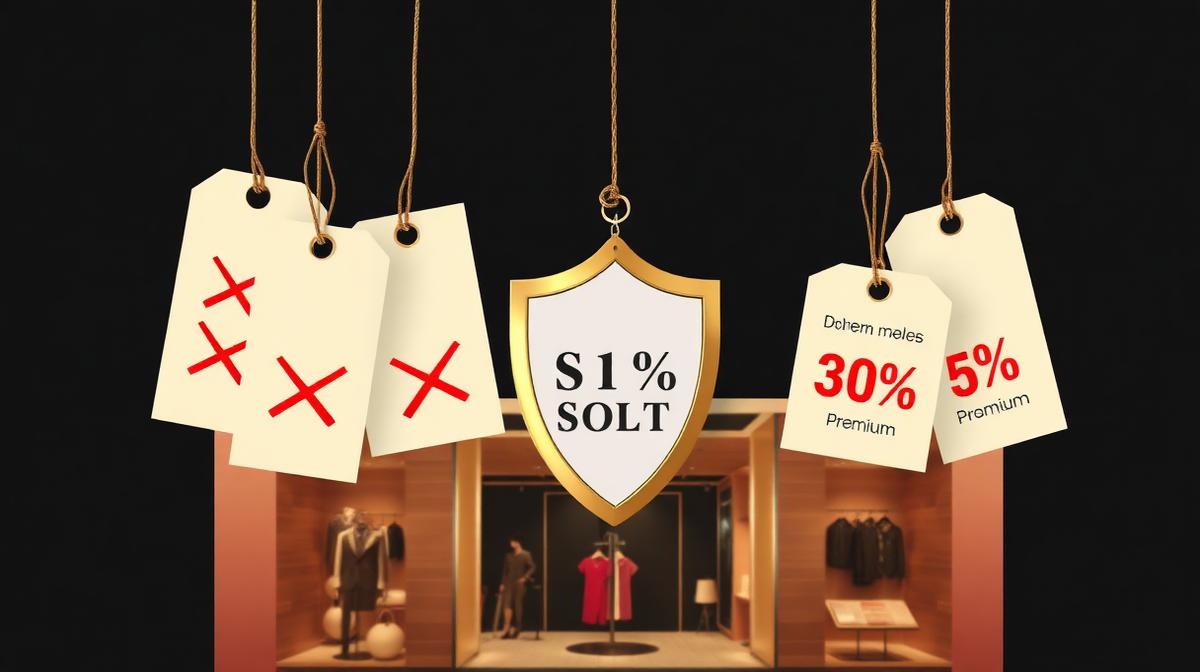
The Discounting Trap
Most fashion brands fall into a predictable cycle: 1. Revenue plateaus → launch a sale 2. Sales spike during promotion → revenue drops after 3. Customers learn to wait for sales → full-price conversion drops 4. More promotions needed to hit targets → margins erode 5. Brand perception shifts from premium to discount
The data is clear: brands that discount more than 25% of revenue see a 15-20% decline in full-price conversion within 18 months.
The Strategic Discount Framework
Rule 1: Never Discount Your Core Your signature products—the items that define your brand—should never be discounted. Full stop. Discounting core products signals that they're not worth the price, permanently damaging their perceived value.
Rule 2: Discount to Acquire, Not to Convert Use targeted promotions for first-time customers, not existing customers. A 15% welcome offer for new subscribers costs less than a site-wide sale and creates a clear value exchange.
Rule 3: Time-Bound Exclusivity If you must run a sale, make it genuinely limited: - 48-hour flash sales (not "extended by popular demand") - Members-only early access (reward loyalty, not deal-seeking) - End-of-season clearance on seasonal items only
Rule 4: Alternative Value Adds Instead of price reductions, offer: - Free shipping (costs less than a discount) - Gift with purchase (drives AOV while maintaining price integrity) - Bundle savings (higher AOV, perceived as value not discount) - Loyalty point multipliers (drives future purchases)
The Promotion Calendar
| Month | Type | Target | Discount Level |
|---|---|---|---|
| Jan | End of season clearance | Old inventory | 30-50% on seasonal items only |
| Feb-Mar | New arrival, no discount | All | $0 (content-driven) |
| Apr | Friends & Family | VIP loyalty members | 20% exclusive access |
| May | Gift with purchase | Mother's Day shoppers | $0 discount + free gift |
| Jun | End of season clearance | Old inventory | 30-50% on seasonal items only |
| Jul-Aug | New arrival, no discount | All | $0 (content-driven) |
| Sep | Loyalty point multiplier | Loyalty members | 2x points (no price discount) |
| Oct | Pre-holiday, no discount | All | Early access, no discount |
| Nov | Black Friday / Cyber Monday | Strategic only | 20-25% on selected items |
| Dec | Gift bundles | Gift buyers | Bundle pricing (10-15% perceived savings) |
Measuring Discount Health
Track monthly: - Full-price sell-through rate: Should be above 65% - Discount penetration: Percentage of revenue sold at a discount (target under 25%) - Promotion elasticity: Revenue lift during promotions vs. post-promotion decline - Customer discount dependency: Percentage of customers who only buy on sale
Communicating the Shift to Stakeholders
If you're reducing discounting, you'll face internal resistance. Present the case in financial terms:
"A 10% reduction in discount penetration improves gross margin by $X. The short-term revenue impact is offset within Y months by improved full-price conversion and customer quality."
The Bottom Line
The strongest fashion brands in the world rarely discount—and when they do, it's strategic, not reactive. Build your brand on value, not price. Your margins, your customer quality, and your brand equity will thank you.
Ready to Turn These Insights Into P&L Results?
PMC doesn't just write about growth—we contract it. See what KPI-contracted growth looks like for your brand.
Get Your Quote