CAC payback period explained: formula, examples and how fashion, beauty and lifestyle brands should read it
The CAC payback period is the time needed to recoup customer acquisition costs. Learn the formula, see examples, and understand how to optimize this crucial DTC metric.
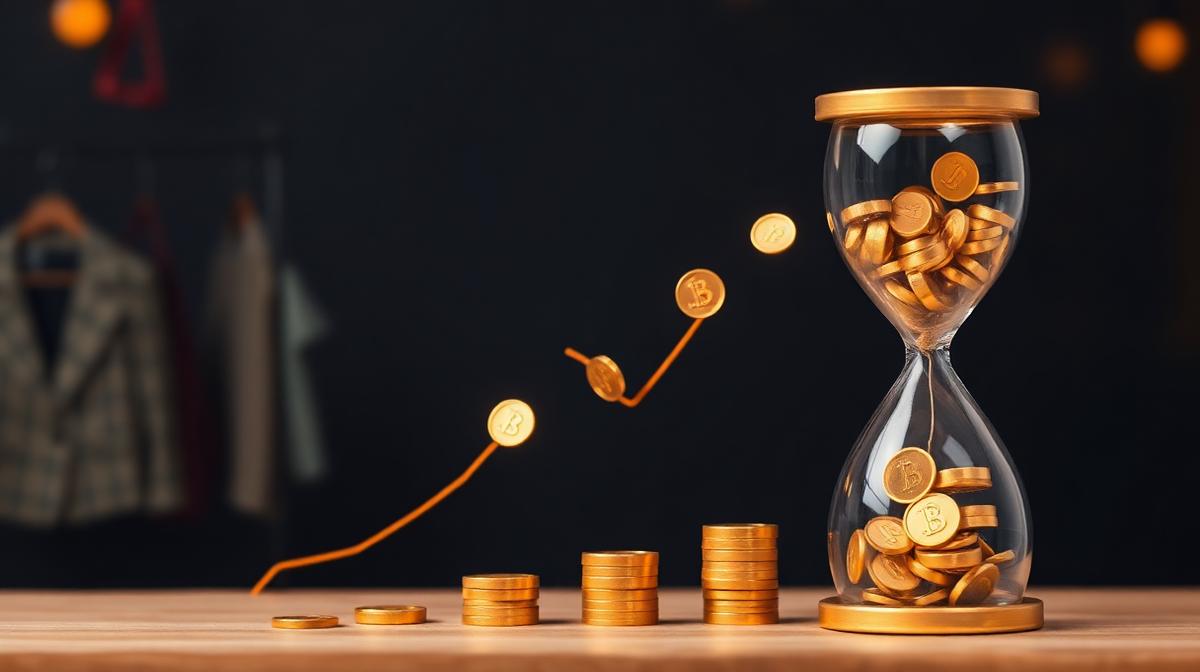
The CAC payback period is the time, typically in months, your business needs to recover the cost of acquiring a new customer from the gross margin they generate. At Principal Media Communications (PMC), we see it as a critical health metric that is essential for balancing a brand's growth velocity with its cash flow efficiency and overall profitability.
Key takeaways
* Definition: CAC payback period measures the time it takes for the gross margin earned from a customer to equal the initial cost of acquiring them. * Importance: It's a crucial indicator of capital efficiency, marketing effectiveness, and short-term cash flow health, especially for inventory-heavy brands. * Core Formula: The basic formula is Customer Acquisition Cost (CAC) divided by the monthly Gross Margin generated per average customer. * Vertical Nuances: The ideal payback period can vary significantly between fashion (longer due to seasonality), beauty (shorter due to high repeat rates), and lifestyle brands (mixed, depends on AOV). * Optimization: Brands can shorten their payback period by lowering CAC, increasing gross margin through higher AOV or better COGS, and improving customer retention rates.
What is the CAC payback period and why is it critical for DTC brands?
For any direct-to-consumer or omnichannel brand leader, capital is finite. Every dollar spent on marketing must not only bring in new customers but also generate a return within a reasonable timeframe. The CAC payback period is the metric that measures exactly that: the efficiency of your customer acquisition spend in terms of time.
It directly answers the question: "How long until a new customer pays for their own marketing cost?"
This metric is a cornerstone of the Acquisition stage of the [AAARRR growth model](/aaarrr-growth-model) but has profound implications for the entire funnel. A short payback period means your marketing dollars are recycled quickly, freeing up cash to reinvest in further growth. A long payback period can strain cash flow, even if the brand is otherwise healthy, because capital is tied up waiting for customers to become profitable. For founders and CFOs, it's a primary lever for managing burn rate and extending the company's financial runway. For CMOs, it's a direct measure of campaign profitability and channel efficiency.
How do you calculate the CAC payback period?
Calculating your payback period requires three key inputs: your Customer Acquisition Cost (CAC), your Average Revenue Per Customer (per month or period), and your Gross Margin percentage. Understanding each component is essential for an accurate calculation.
| Component | Definition | Formula |
|---|---|---|
| **Customer Acquisition Cost (CAC)** | The total cost of sales and marketing required to acquire one new customer over a specific period. | `Total Sales & Marketing Spend / # of New Customers Acquired` |
| **Average Revenue Per Customer (ARPU)** | The average revenue generated per customer within a specific timeframe (e.g., per month). | `Total Revenue in Period / # of Customers in Period` |
| **Gross Margin %** | The percentage of revenue left after subtracting the Cost of Goods Sold (COGS). | `((Revenue - COGS) / Revenue) * 100` |
| **CAC Payback Period (Months)** | The number of months it takes to earn back your CAC. | `CAC / (ARPU per Month * Gross Margin %)` |
Accuracy here is paramount. Your CAC should include all relevant costs: ad spend, agency or partner fees, marketing team salaries, and creative costs. Your Gross Margin must be precise. Miscalculating COGS can make your payback period seem artificially short or dangerously long.
What is a good CAC payback period?
A "good" CAC payback period is not a universal number; it's highly contextual to your brand's financial position, funding, and vertical.
Generally, a shorter payback period is considered better from a cash flow perspective. Many venture-backed or growth-oriented DTC brands may aim for a payback period of under 12 months, with 6-9 months often seen as a strong target. A period under 6 months is typically considered excellent, as it indicates highly efficient marketing and a strong product-market fit.
However, a longer payback period (e.g., 12-18 months) can be a strategic choice for:
* Well-funded brands pursuing aggressive market share capture. * Brands with very high LTV, where the long-term payoff justifies the initial cash outlay. * Subscription-based models where retention is predictable and churn is low.
The right target for your brand depends on a candid assessment of your balance sheet, inventory turnover, and overall growth strategy. The key is to define a target and track your performance against it.
How should fashion, beauty, and lifestyle brands interpret their payback period?
The nature of your product and customer behavior heavily influences how you should read and react to your CAC payback period. What works for a beauty brand may be unrealistic for a fashion label.
* Fashion: This vertical often contends with longer payback periods. Seasonality means marketing spend is concentrated, while purchasing is cyclical. High return rates can also eat into gross margin on the first purchase, extending the time to profitability. For fashion brands, it's often more practical to measure payback over a 6 or 12-month cohort basis, focusing on driving the second and third purchases to shorten the effective payback window.
* Beauty: Beauty brands, particularly those with consumable products (skincare, cosmetics), can often achieve shorter payback periods. High repeat purchase rates and the potential for subscription models mean the revenue stream from a new customer is more predictable. A beauty brand might track payback on the first order but pay close attention to the 30- and 60-day repurchase rates as leading indicators of LTV and payback velocity.
* Lifestyle & Home Goods: This category is often a hybrid. It can feature high-AOV items (e.g., furniture, high-end cookware) but with low purchase frequency. A single purchase might be large enough to pay back CAC instantly. However, for lower-priced lifestyle items, the payback period might be longer, and the strategy may focus on cross-selling related products to increase the customer's initial basket size or their lifetime value.
Worked example (illustrative)
To make this tangible, let's walk through a simplified, illustrative example for a fictional DTC beauty brand.
Scenario: "Glow Beauty Co."
* Total Monthly Marketing Spend: $50,000 * New Customers Acquired in Month: 1,000 * Average Order Value (AOV) on first purchase: $75 * Gross Margin: 60%
Step 1: Calculate CAC * CAC = $50,000 / 1,000 = $50
Step 2: Calculate Gross Margin per First Order Gross Margin per Order = AOV Gross Margin % Gross Margin per Order = $75 60% = $45
Step 3: Analyze Payback on First Order In this scenario, the brand does not pay back its CAC on the first order ($45 gross margin is less than $50 CAC). The brand needs to make an additional $5 in gross margin from this customer.
Step 4: Model the Full Payback Period Let's assume Glow Beauty Co.'s data shows that, on average, a customer's subsequent purchases generate an additional $15 in gross margin per month for the next few months. * Payback Period = CAC / Average Monthly Gross Margin per Customer * Payback Period = $50 / $15 = 3.33 months
Disclaimer: This is a simplified, illustrative example. Real-world calculations should account for returns, cohort-based purchasing behavior, and other variables.
What are the primary levers for improving your CAC payback period?
Improving your payback period means making your acquisition engine more efficient. This involves pulling three main levers, often simultaneously:
- 1. Decrease Customer Acquisition Cost (CAC): The most direct approach. This is achieved by improving ad campaign performance (higher CTR, better targeting), enhancing website conversion rates (CRO), and building organic channels (SEO, email, social) that acquire customers at a lower cost.
- 1. Increase Average Gross Margin per Customer: This can be done in two ways. First, increase the top line by encouraging higher AOV through bundling, upselling, or setting strategic shipping thresholds. Second, protect the bottom line by negotiating better terms with suppliers to lower COGS or strategically adjusting pricing.
- 1. Shorten the Time to Second Purchase: While this is technically a retention metric, it has a massive impact on payback. The faster a customer comes back to buy again, the quicker you recoup your initial acquisition cost. Post-purchase email flows, loyalty programs, and timely new product announcements are key tactics here.
Balancing these levers is a core function of a growth-focused team. For example, a [KPI-contracted growth partner vs. an agency](/kpi-contracted-growth-partner-vs-agency) might be structured to focus explicitly on optimizing these inputs to drive profitable, capital-efficient growth.
Frequently asked questions
What's the difference between blended vs. paid CAC payback? Blended CAC includes all new customers, regardless of source (paid, organic, direct, referral), in its calculation. Paid CAC focuses only on customers acquired through paid marketing channels. Calculating your paid CAC payback is crucial for making decisions about ad budgets, as it isolates the direct ROI of your marketing spend.
Should I calculate payback on the first order or over a period? Both are useful. Calculating payback on the first order tells you about the immediate profitability of a new customer and the effectiveness of your AOV strategies. However, calculating it over a 6 or 12-month period gives a more realistic and holistic view of customer value, especially for brands reliant on repeat business.
How often should I track this metric? Your CAC payback period should be calculated monthly and reviewed as part of a quarterly business review to identify trends. For brands with significant ad spend, the underlying components—like paid CAC and channel-specific ROAS—should be monitored weekly or even daily to allow for rapid optimization.
Can a long payback period ever be acceptable? Yes, in specific strategic contexts. A well-capitalized brand in a land-grab situation might intentionally accept a 12-18 month payback period to rapidly acquire market share from competitors. This is a viable strategy only if the company has a strong balance sheet and high confidence in its long-term customer LTV.
Next step
Understanding your CAC payback period is the first step. Optimizing it for profitable growth is the next. If you are a founder, CMO, or CFO at a $5M–$25M North American fashion, beauty, or lifestyle brand looking to improve capital efficiency and scale profitably, consider our [Free Revenue & P&L Audit](/get-quote). We can help you analyze the key metrics that determine your brand’s financial health and growth potential.
---
Written by Amin Robinson, Founder, Principal Media Communications. Reviewed by the PMC Analytics & Finance Desk. Part of the [AAARRR Growth Playbook](/aaarrr-growth-model). Example figures are illustrative, not client results.
Related PMC resources
- •[Free Revenue & P&L Audit](/get-quote) — find where revenue and margin are leaking before you scale.
- •[DTC Profitability Audit](/dtc-profitability-audit) — what a P&L-first audit covers.
- •[What performance-based growth agencies cost](/performance-based-growth-agency-cost) — fee models compared.
- •[KPI-contracted growth partner vs traditional agency](/kpi-contracted-growth-partner-vs-agency)
- •[The AAARRR growth model hub](/aaarrr-growth-model)
Ready to Turn These Insights Into P&L Results?
PMC doesn't just write about growth—we contract it. See what KPI-contracted growth looks like for your brand.
Get Your Quote